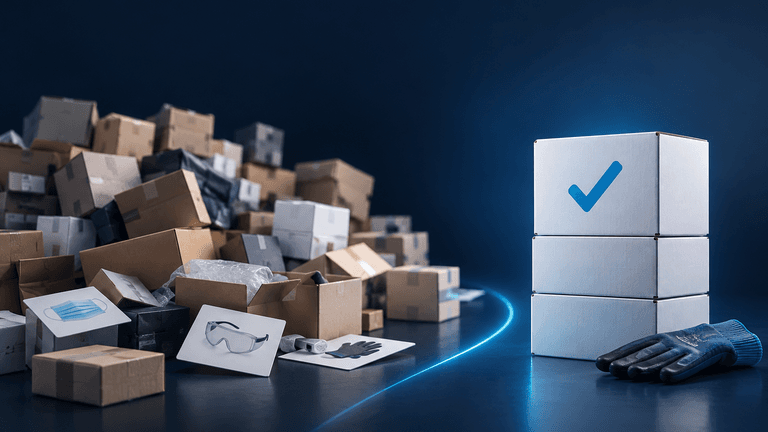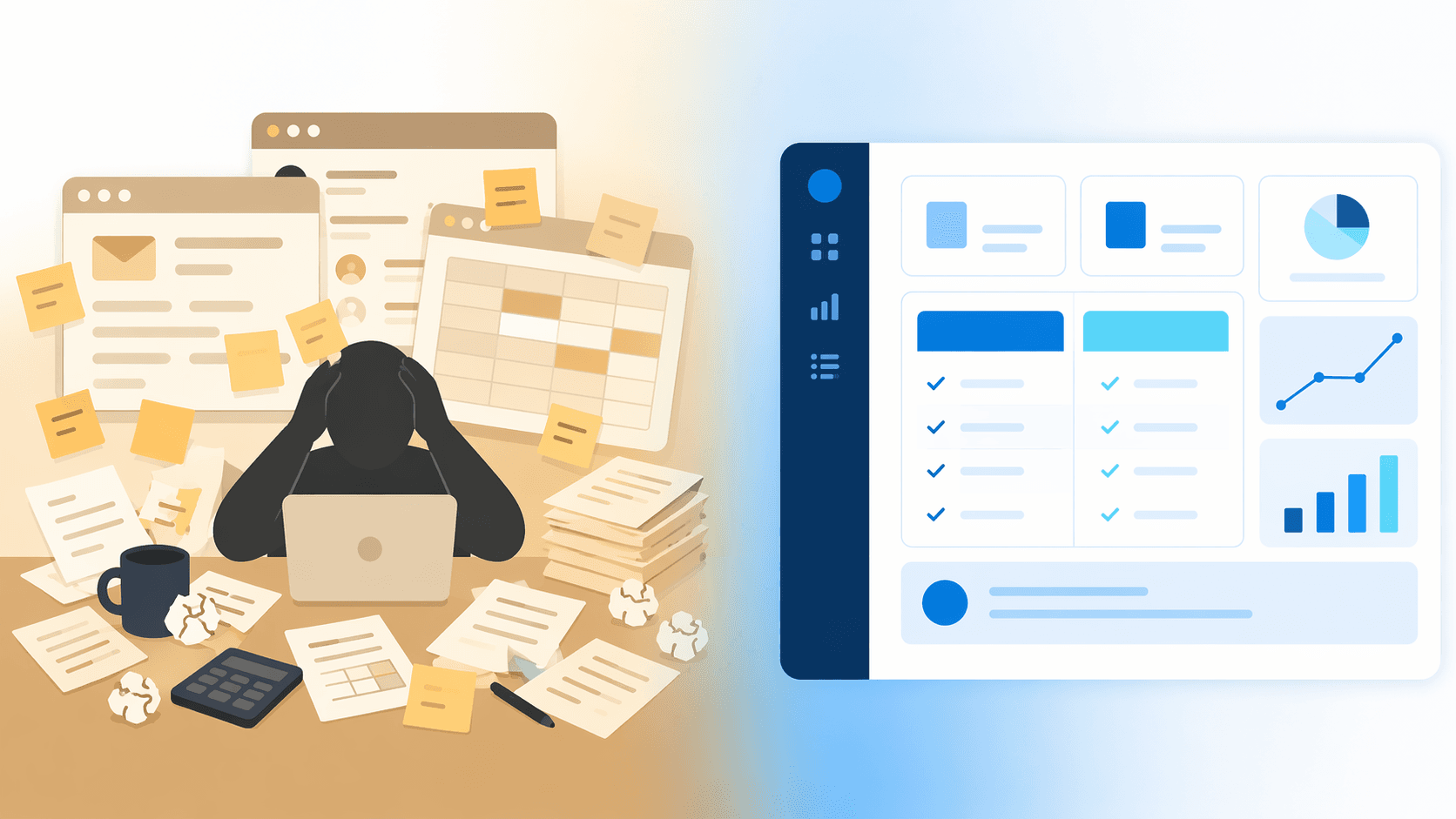
If your PPE procurement process still runs on email chains, unverified supplier lists, and side-by-side spreadsheet comparisons - you're not alone. Most procurement teams across Europe still source safety equipment the same way they did over a decade ago.
And honestly? It's understandable. The old way feels familiar. You know the suppliers. You know the process. You've got your spreadsheet templates dialled in. But familiarity isn't the same as efficiency - and in today's market, the gap between the two is widening fast.
Let's talk about what that gap is actually costing you.
The Spreadsheet Trap
Here's a scenario that will sound painfully familiar to anyone who's ever managed a PPE sourcing cycle.
You send out an RFQ to five or six suppliers. One replies in two days, another takes a week. Two come back with quotes in completely different formats - one prices per unit, the other per carton. A fifth sends a PDF with no breakdown at all. Now you need to normalize everything into a single spreadsheet just to compare.
By the time you've lined up the offers, chased the stragglers, and confirmed minimum order quantities, two weeks have passed. And you still don't know if any of these suppliers are actually verified to meet EU PPE Regulation 2016/425.
Nearly 50% of procurement teams still waste hours fixing spreadsheet errors and manually reconciling data, according to recent industry surveys. That's not a process - that's a workaround that somehow became permanent.
The real question isn't whether your spreadsheet works. It's what your team could be doing instead of maintaining it.
The Hidden Costs Nobody Talks About
When we say "cost," most procurement professionals think about unit price. But the real cost of outdated sourcing goes far beyond what's on the invoice.
Time cost. A typical RFQ cycle for PPE - from initial request to final supplier selection - can take anywhere from two to six weeks when managed manually. Multiply that across a dozen product categories per quarter, and your procurement team is spending the majority of its time on administrative busywork rather than strategic sourcing.
Opportunity cost. While your team is buried in email threads and quote comparison spreadsheets, competitors with streamlined processes are locking in better pricing, discovering new manufacturers, and expanding their catalogues. Every week spent on manual sourcing is a week not spent on growth.
Risk cost. This one's the most dangerous because it's invisible until it isn't. When you're sourcing from suppliers you haven't properly verified - or when you're relying on a contact list that hasn't been updated since 2018 - you're exposed. Non-compliant products, unreliable delivery, missing Declarations of Conformity. In the PPE industry, these aren't just inconveniences. They're liabilities.
Relationship cost. Inconsistent communication, slow response times, and disorganized purchasing processes don't just frustrate your team - they frustrate your suppliers too. The best manufacturers want to work with professional, organized buyers. If your process signals chaos, the top-tier suppliers quietly prioritize other clients.
The 4 Hidden Costs of Manual PPE Sourcing
🕐 Time - Weeks lost to chasing quotes and normalizing data
📉 Opportunity - Better pricing and new suppliers going to faster-moving competitors
⚠️ Risk - Unverified suppliers and missing compliance documentation
🤝 Relationships - Top manufacturers deprioritizing disorganized buyers
Why the Industry Got Stuck
PPE procurement didn't stay manual because procurement teams are lazy or uninformed. It stayed manual because, for a long time, there wasn't a better option that actually fit the way this industry works.
Generic procurement platforms were built for indirect spend - office supplies, IT equipment, MRO. They weren't designed for the complexities of safety equipment sourcing, where CE marking compliance, category-specific EN standards, and supplier verification aren't optional extras - they're non-negotiable requirements.
Meanwhile, the PPE supply chain itself has been undergoing massive shifts. The pandemic exposed just how fragile global sourcing networks were, with some protective clothing prices in Europe surging by as much as 40%. Organizations that had diversified, verified supplier networks weathered the storm. Those running on a handful of familiar contacts and a prayer? They scrambled.
And yet, even after that wake-up call, many teams snapped right back to the old playbook. Because when the crisis passed, the urgency faded - and the spreadsheets were still right there, waiting.
"We've always done it this way" is the most expensive sentence in procurement.
What "Modern" Actually Looks Like in PPE Sourcing
Modernizing PPE procurement doesn't mean replacing your team with software. In fact, the most effective approach is the opposite - it's about giving your team better infrastructure so they can focus on decisions rather than data entry.
Here's what that looks like in practice:
Standardized offers. Instead of spending days normalizing quotes from different suppliers into comparable formats, every offer follows the same structure. Same units, same breakdowns, same compliance documentation. You compare apples to apples, not assumptions to assumptions.
Verified suppliers. Every manufacturer and wholesaler in the network is vetted before they ever send you a quote. CE marking, Declarations of Conformity, production certifications - checked and documented, not assumed.
Centralized request management. One place for all your sourcing requests, all your offers, all your communication. No more digging through inboxes or shared drives to find that one email from three weeks ago with the updated pricing.
End-to-end visibility. From the moment you submit a request to the moment your order is delivered, every milestone is tracked with real-time alerts. No black boxes, no radio silence between order confirmation and delivery.
A human layer that actually mediates. This is the part most platforms get wrong. PPE sourcing isn't a self-serve checkout. It's a negotiation. It requires context, judgment, and relationship management. The best approach combines technology infrastructure with procurement professionals who actively work between buyers and suppliers - standardizing offers, managing communication, and ensuring nothing falls through the cracks.
The Compounding Effect
The difference between manual and managed procurement isn't just about saving a few hours per RFQ cycle. It compounds.
Teams that modernize their sourcing process consistently report shorter cycle times, better pricing through broader supplier access, fewer compliance incidents, and - perhaps most importantly - the ability to shift their focus from operational firefighting to strategic category management.
In an industry where procurement teams are already stretched thin by expanding responsibilities, that shift isn't a luxury. It's a competitive necessity. Deloitte's Global CPO Survey found that only 10% of top-performing procurement leaders believed their teams had the full skills and capabilities needed to deliver their strategy. That's not a training problem - it's a bandwidth problem. And bandwidth starts with eliminating the manual work that shouldn't exist in the first place.
Only 10% of top-performing procurement leaders say their teams have the skills and capacity to fully deliver their strategy. The other 90%? They're buried in process, not empowered by it.
The Bottom Line
Sourcing PPE the way you did in 2010 doesn't just slow you down. It costs you money, exposes you to compliance risk, and keeps your team trapped in low-value work while the market moves forward.
The good news? You don't need a massive digital transformation project to fix it. You need a procurement partner that understands the PPE industry, handles the complexity for you, and gives your team the tools and support to source smarter.
That's exactly what a managed procurement approach delivers - not just a platform to log into, but a team that works alongside yours to make every sourcing decision faster, more informed, and more controlled.
Ready to see what modern PPE sourcing actually looks like? Explore Traxfair →