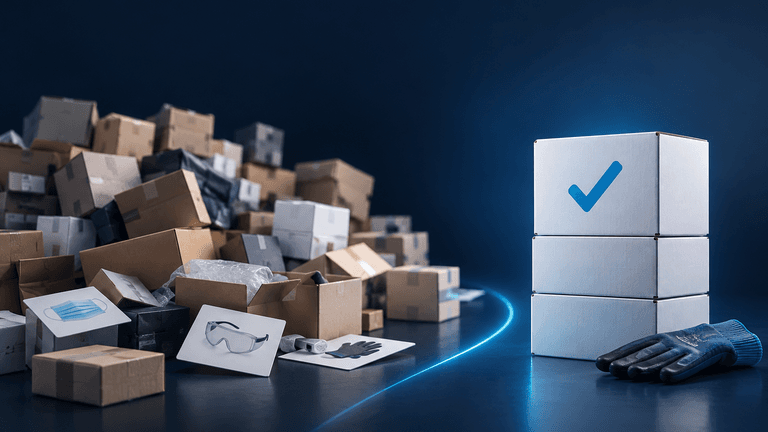
The EU just ended duty-free cheap parcels. Here's what it means for PPE sourcing
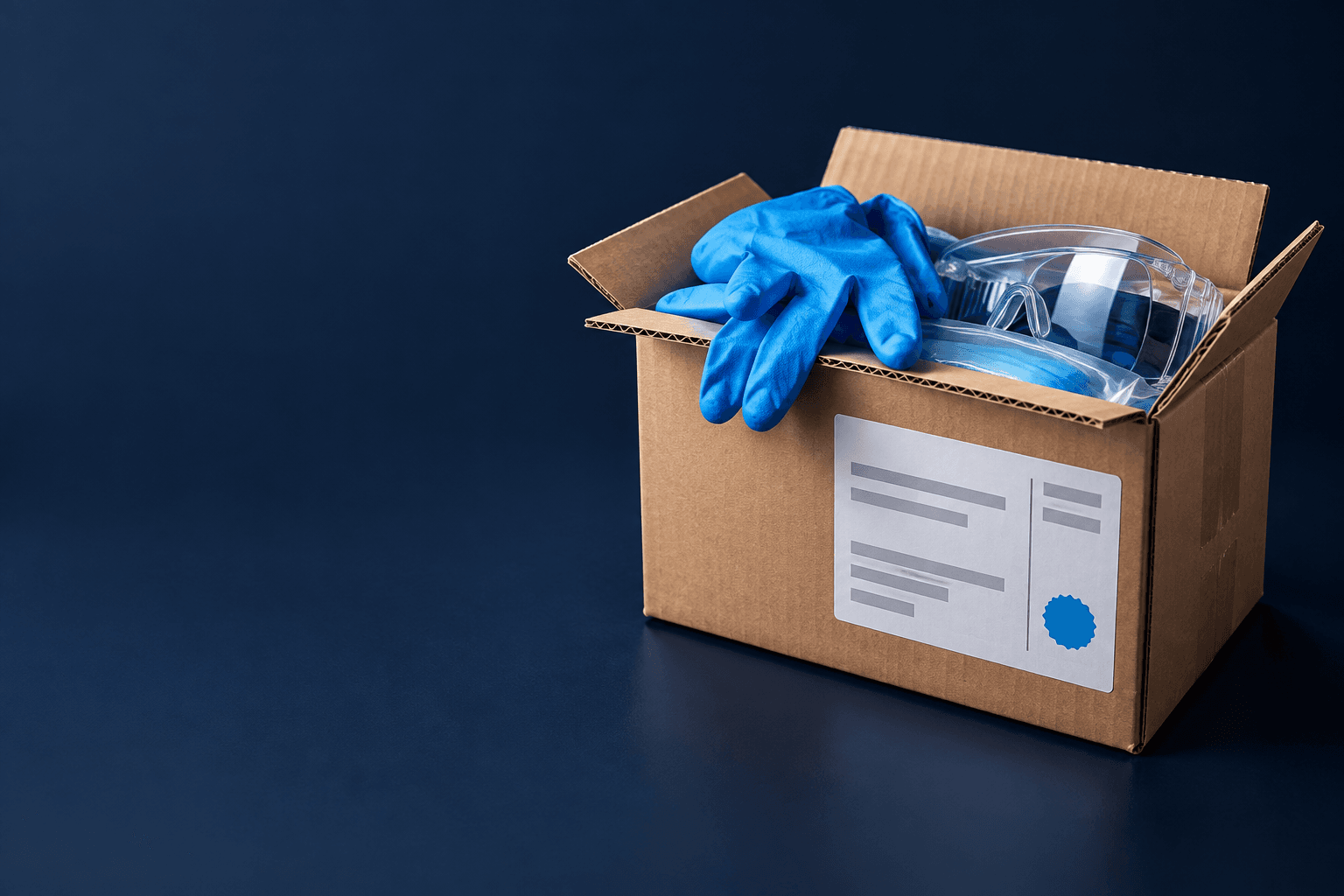
If you run a small PPE distribution business, you've probably done this. A customer asks about a new glove or a pair of safety glasses, you find something promising on AliExpress or Temu, and you order a few samples to see what turns up. It's fast, it's cheap, and until this summer it came in duty-free.
That changed on 1 July 2026. Every low-value parcel from outside the EU now pays customs duty, and from November a handling fee lands on top. The EU also passed a customs reform that makes platforms and non-EU sellers responsible for what they ship to consumers.
For a small distributor, the new costs are noticeable but manageable. The bigger question is what the reform says about the products themselves, and who is left holding the risk when PPE bought this way doesn't meet EU rules.
What actually changed
Until 30 June 2026, goods in consignments worth up to €150 entered the EU without customs duty. VAT applied, but duty didn't. Council Regulation (EU) 2026/382 removed that exemption. Since 1 July, distance sales from outside the EU, which covers most online orders from non-EU marketplaces, pay a flat €3 customs duty per item.
"Per item" has a specific meaning here. It counts each different tariff classification in the parcel, not each unit. The Commission's own example: five T-shirts count as one item and pay €3, while one T-shirt and one watch count as two and pay €6. Fifty pairs of the same glove are one item. A sample box with gloves, safety glasses, a helmet and earplugs is four.
The flat duty is temporary. It runs until 1 July 2028, when the new EU Customs Data Hub goes live for e-commerce. After that, low-value goods pay the normal tariff for their product category, like everything else.
The second charge is a handling fee, meant to cover the cost of checking the flood of small parcels. EU countries must start collecting it by 1 November 2026 at the latest. The exact amount is set through a Commission delegated act, but Dutch customs has already announced €2 from 1 November, and that figure is widely expected elsewhere. Some countries, including France, Italy and Romania, started national fees earlier.
In 2025, almost 5.9 billion low-value items were shipped directly into the EU without paying customs duty. The €3 rule is the EU's first serious attempt to change that.
One more date matters. From 1 November 2026, product identifiers become mandatory on these declarations, so customs can trace and block specific non-compliant products rather than whole shipments.
Platforms become the importer, for consumers
The duty is the headline, but the structural change is in the wider customs reform the Council approved in September. Under the new Union Customs Code, non-EU sellers and the platforms that facilitate their sales are treated as the importer when they ship directly to EU consumers. That makes them responsible for accurate customs data, for paying duties and fees, and for compliance with EU product safety rules. Serious breaches can cost up to 6% of the annual value of goods a company imported the year before.
The handling fee arrives this autumn, but the importer obligations come later. They start applying 12 months after the reform enters into force, so realistically from late 2027.
The part worth reading twice is the scope. These rules exist to protect consumers buying direct. They put a responsible party in the EU between a shopper and an overseas seller.
The new rules make platforms answerable to consumers. They don't make them answerable to a business that buys PPE to resell.
If you're a distributor buying stock to sell on, you're not the consumer in this picture. You're the next link in the chain, and in PPE that link comes with its own legal responsibilities.
What it costs a small distributor
Take three typical small orders, none of which paid customs duty before 1 July. We've assumed a €2 handling fee per parcel from November. If your country charges it per item instead, the numbers go up.
A single parcel with 50 pairs of one nitrile glove, worth €90, counts as one item. It pays €3 in duty and €2 in handling, so €5 extra, or about 6%.
A sample box with five different product types, worth €120, counts as five items. That's €15 in duty plus €2 in handling, so €17 extra, or about 14%.
The same five samples ordered from five different sellers arrive as five parcels. Duty stays at €15, but handling rises to €10, so the extra cost is €25, or about 21%.
The pattern is clear. Bulk orders of a single product barely notice the change. Sample orders, which by definition mix product types, get hit hardest. And splitting samples across several sellers to compare them, which is exactly how most people evaluate new PPE, is now the most expensive way to do it.
For a business ordering samples a few times a month, that adds up to several hundred euros a year. Annoying, but not what should change your sourcing strategy. The compliance side is.
The bigger risk: in PPE, you might be the importer
Under Regulation (EU) 2016/425, an importer is any business established in the EU that places PPE from a third country on the EU market. If you buy gloves or glasses from a non-EU seller and resell them to your customers, that business is usually you.
Importers carry real obligations under Article 10. You may only place compliant PPE on the market. Before you do, you have to make sure the manufacturer completed the right conformity assessment, which for Category II and III products means a valid EU type-examination certificate from a notified body. Your own name and postal address must appear on the product, its packaging or the accompanying documents. You must keep the EU declaration of conformity for 10 years and be able to produce the technical documentation if a market surveillance authority asks. And if you find out a product doesn't conform, you're the one who has to fix it, withdraw it or recall it.
Buying PPE on a consumer marketplace doesn't make you a consumer. If you resell it, the importer's obligations can land on you.
This is where the low-value channel gets risky. The EU's own figures show why it's cracking down. In targeted inspections across all 27 member states in 2025, covering categories including PPE, more than 60% of checked products failed EU standards, mostly over missing labels, banned substances or absent safety documentation. A sample that looks fine in your hand tells you nothing about whether the paperwork behind it exists.
The new product identifier requirement from November makes this sharper. Customs will be able to link a specific product to a specific declaration, which makes non-compliant goods easier to find, and the business that put them on the market easier to identify.
What to do instead
None of this means you should never order from outside the EU. It means the cheap parcel is no longer the obvious default, and a few habits are worth changing.
Start with where your supplier sits. If you buy from a manufacturer or importer already established in the EU, they carry the importer's obligations and you act as a distributor. You still have to check the CE marking and documents, but you're not the one answering for the conformity assessment. The reform pushes in the same direction, encouraging non-EU sellers to hold stock in EU warehouses.
Sample from the source you'd actually buy volume from. A sample from a marketplace listing tells you little about the factory that would fill a 5,000-pair order. Ask for the EU type-examination certificate and the declaration of conformity before the samples ship, not after.
Consolidate where you can. One parcel from one supplier with the products you need beats five parcels from five sellers, both on fees and on the paper trail.
The real cost of a €2 pair of gloves includes the certificate behind it. If nobody can show you one, the price isn't the bargain it looks like.
This is the gap Traxfair was built for, especially for smaller distributors who don't have a sourcing team. We connect you with verified manufacturers and wholesalers, standardise their offers so you can compare apples to apples, and handle the back-and-forth in between. It's free for buyers.
Looking for a new product line without the parcel lottery? Submit a sourcing request and we'll find verified suppliers for it.